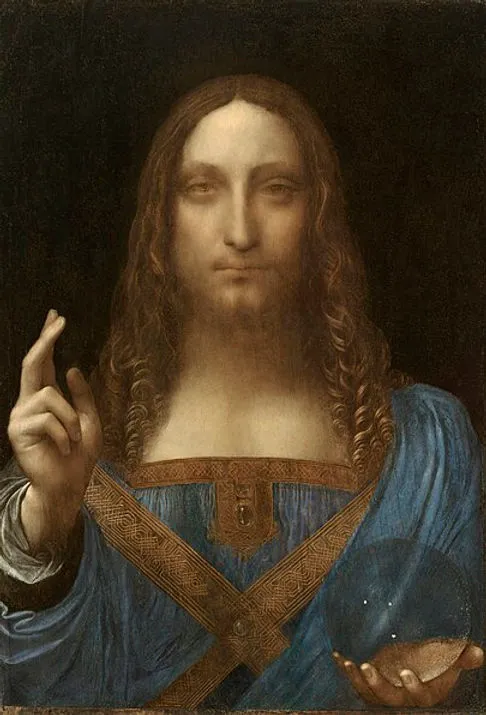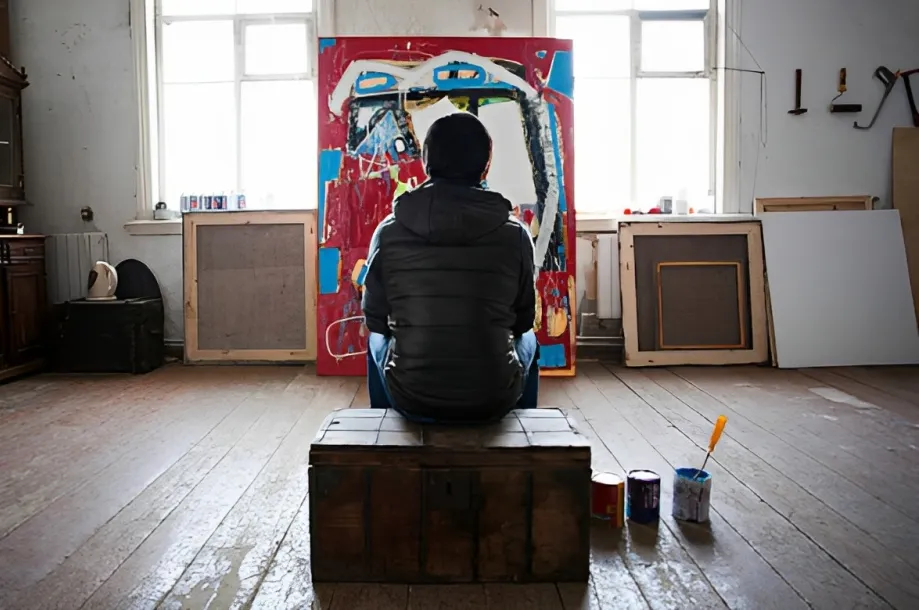

Face a painting that resonates with you, and something weird occurs. Your chest gets tight, your breathing is reduced, perhaps your eyes even begin to tingle, and tears start to flow, and if someone asked, you could not explain why. Somebody from 200 years ago has put their brush out there and touched something in you. This is not just a lighting effect, but is actually what is happening. It is your brain’s job, and that is what it does.
What goes on inside our heads when we’re moved by art is one of the more interesting intersections of neuroscience and human behavior in recent years, and now, with real data, we can actually learn more about the psychology of art and answer: how does art affect mental health? And why does art make us feel emotions?
Let’s get scientific about it and discuss more about art and the brain.

Neuroscience of Art Appreciation
Until recently, art appreciation was considered a purely subjective experience, one based on the personal taste of the viewer, and therefore not subject to hard scientific measurement. That’s changed. A study of brain imaging has found that if art really touches us, it is not only the parts of the brain involved in visual processing that light up. It also simultaneously engages brain systems of emotion and self-referential memory.
A meaningful encounter with art simultaneously activates external attention networks and the brain’s default mode network, the same network that is active when people daydream, introspect, and remember autobiographical events, according to a 2025 report published by the American Psychological Association’s Monitor on Psychology.
That means that the brain is not just looking at or processing the artwork when it is actually resonating with the art piece; it is actually mixing up what you see and your own recollection and sense of self. And hence, when two people are looking at the same artwork, they are experiencing it in completely different ways.
This is the very essence of the neuroscience of art appreciation: not the activation of one discrete brain region, but the harmonious dialogue between perception, emotion, and memory.
What Part Of The Brain Responds To Art?

There is no one “art center” in the brain. Rather, a number of regions collaborate:
The visual cortex processes basic aspects such as color, form, composition, and movement.
Unsettling or dramatic artworks can evoke a true physical reaction because the amygdala is the brain’s emotional alarm system, which reacts to tension, colour richness, and subject matter.
The reward circuitry (nucleus accumbens, orbitofrontal cortex) releases dopamine when we see something beautiful or pleasing, just like when we smell food or hear music — dopamine is released.
The default mode network, referenced above, connects what we see to our own memory and meaning and makes the image feel particularly real to us.
Between art and the brain is an overlap; it is what makes a painting for the viewer an emotional experience. The artwork or the view doesn’t change, but the experience of it does, changing the memory and so mood according to the personal history of the person.
That’s why it is said that art can inspire emotions because of its ability to communicate a message or idea.
Read more: Biophilic Design 101: Using Art Psychology to Choose Office Wall Art
Why Do Humans Have An Emotional Connection To Art?
Why is it that art elicits emotion? Well, because we don’t analyze as much when we’re looking at art. The best artwork does not tell you what it means – it gives you a vague emotional hint, and you complete the message. Aesthetic emotion and feeling are so personal that they are likely to feel more intimate than other kinds of feeling in response to works of art.
There’s a predictive component involved too. Our brains are looking for a clue about what they will sense next. Art that flouts those expectations—with an unusual colour palette, unexpected symmetry, or an incongruous subject- can result in a small jolt of surprise. And when this occurs, the brain is pleasantly or even displeasantly surprised. That is the vibration we sometimes feel as if being “moved” by a piece.
Emotional Response To Color

One of the first and foremost things—a trigger that happens when you see a work of art is the colors. The emotional responses are related to color, and it is studied a lot psychologically. Every color has a feeling or an emotion attached to it, and hence when you look at a painting, the first thing that your brain reacts to is color.
Warm colors, such as red and orange, are the ones that indicate passion, energy, urgency, or aggression, even arousal, while, on the other hand, there are cool tones, the blues and greens, which trigger calmness, distance, or melancholy.
These connections are not exclusively cultural; some colour-emotion correspondences seem to have an evolutionary basis, such as the “alertness” caused by red, as a warning colour in nature.
That’s one of the reasons why color has become the first thing people seem to judge whether a piece of artwork is “cool” or not, before they’ve even taken the time to think about what’s being depicted.
The Impact Of Art On Mental Health—Can Looking At Art Reduce Stress?

This is where the psychology of art gets down to numbers. In a study published in 2025 by King’s College London in collaboration with the Courtauld Gallery and the Psychiatry Research Trust, visitors to the gallery showed a shift in their physiology when they were exposed to the original works of art. The body’s main stress hormone, cortisol, decreased an average of 22 percent in the gallery group, a result that was significantly greater than an 8 percent decrease among those who viewed the same paintings in a non-gallery setting. Measures of inflammation associated with chronic stress also decreased, and in addition, heart rate variability indicated a greater emotional involvement.
The researchers who conducted the study compared the soothing but stimulating effect of viewing art to the effects of people who exercise or meditate, and described museums and galleries as accessible, non-clinical environments for preventive health promotion.
So is there a biological connection between art and mental health? Yes, based on this research. The nervous, hormonal, and immune systems seem to be stimulated at the same time when viewing art, a condition that the researchers remarked has never been documented in one study before.
Why Do Humans Create Art?

This much psychological activity is generated by the viewing of art; so it is equally worth asking why humans create art. People were painting on cave walls, carvings were being made of figures, and tools were being decorated well before the era of writing. Art-making is thought by psychologists to provide several gratifying emotional functions to the human person: processing emotion, communicating ideas that language cannot adequately convey, establishing social bonds by means of shared symbols, and simply exercising the brain’s need for pattern and meaning in raw experience.
Producing artwork also stimulates a large number of the reward and emotional regulation circuits that are also stimulated by viewing it, hence the reason why art therapy is a legitimate, evidence-informed process for processing grief, trauma, and anxiety.
How Does Art And Music Affect The Brain?

Art and music are frequently taught together, as there are emotional and reward pathways that overlap. Both stimulate the dopamine system in the brain, both lower cortisol levels, and both
can engage the self-referential processing in the default mode network. It is also about time as much as anything else: With music, the emotional content is built up through a series of rhythms and anticipation, while on the other hand, with a work of visual art, it is built up in one extended moment, and the viewer can linger on it and not follow it through a succession of anticipation and rhythms.
Further Reading: The Art Behind Music’s Most Iconic Album Cover Designs
The Takeaway
We aren’t being too sentimental when we say that we feel a connection to art. It is a physical, measurable, perceptive, remembering, emotive, and even hormonal reaction all playing out at the same time. When you stop to look at a painting and it makes you relax, or makes you feel something you couldn’t point a finger at, know that this is not a mere coincidence, but it is your brain operating on your life tracks.