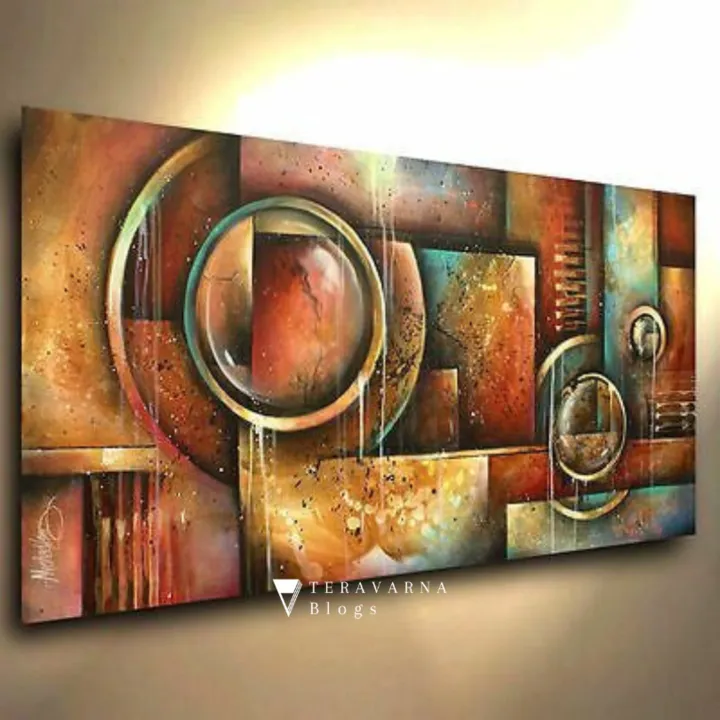

The beginning of good art care is knowing that it is harder than most people think and more fragile than most people hope, especially for modern and mixed-media art. A wet wipe can ruin an unvarnished surface on an acrylic painting that may be hanging for decades. It can be a paper work that looks flawless for years, and after one monsoon season, it spots.
The Art Care at Home series of guides includes information on caring for acrylics, cleaning an acrylic painting, protecting paintings from humidity, whether or not artworks will fade in the sun, caring for paper artwork, and caring for acrylic paint brushes.
Let’s dig in.
How To Care For Acrylic Paintings?

As an artist who loves to paint with acrylic myself, I know how much it hurts when the painting gets damaged somehow, and so here I am with some of the best tips and advice to protect your acrylic paintings:
Now, acrylic colours are forgiving; you can always work well with them, but they still need maintenance. And the start is how you varnish it.
The paint sets within minutes, but it takes time to fully harden, so before you varnish it, give it a week or two. It is even advised to wait for 2 to 4 weeks after finishing the painting to add varnish to it.
Always hold the painting by the edges because the natural oil of your hands or dirt can easily make a smudge.
Never ever put it in direct sunlight. Or any extreme temperatures, for that matter. A rapid shift in temperature can also damage the paint.
We all protect the painting from the front and often forget about its back. I have made that mistake too, so writing from experience: always protect the back too. Wrap it with gelatin if possible; if not, a frame, because bugs and dust can damage it. Leave a small wall bumper in the backing cover to let air circulate through.
Varnished Vs. Unvarnished Canvases—For Art Care
Varnish is essential because it acts as a protective layer. The dirt does not get to the paint when there is varnish; the layer of varnish traps the dirt. On unvarnished canvas, the dirt sinks in, and so it ruins the artwork over time.
If you prefer the matte look of the unvarnished canvas, then make sure that you protect it at all times because cleaning it often can also damage the artwork.
How to Clean an Acrylic Painting Without Ruining the Painting?
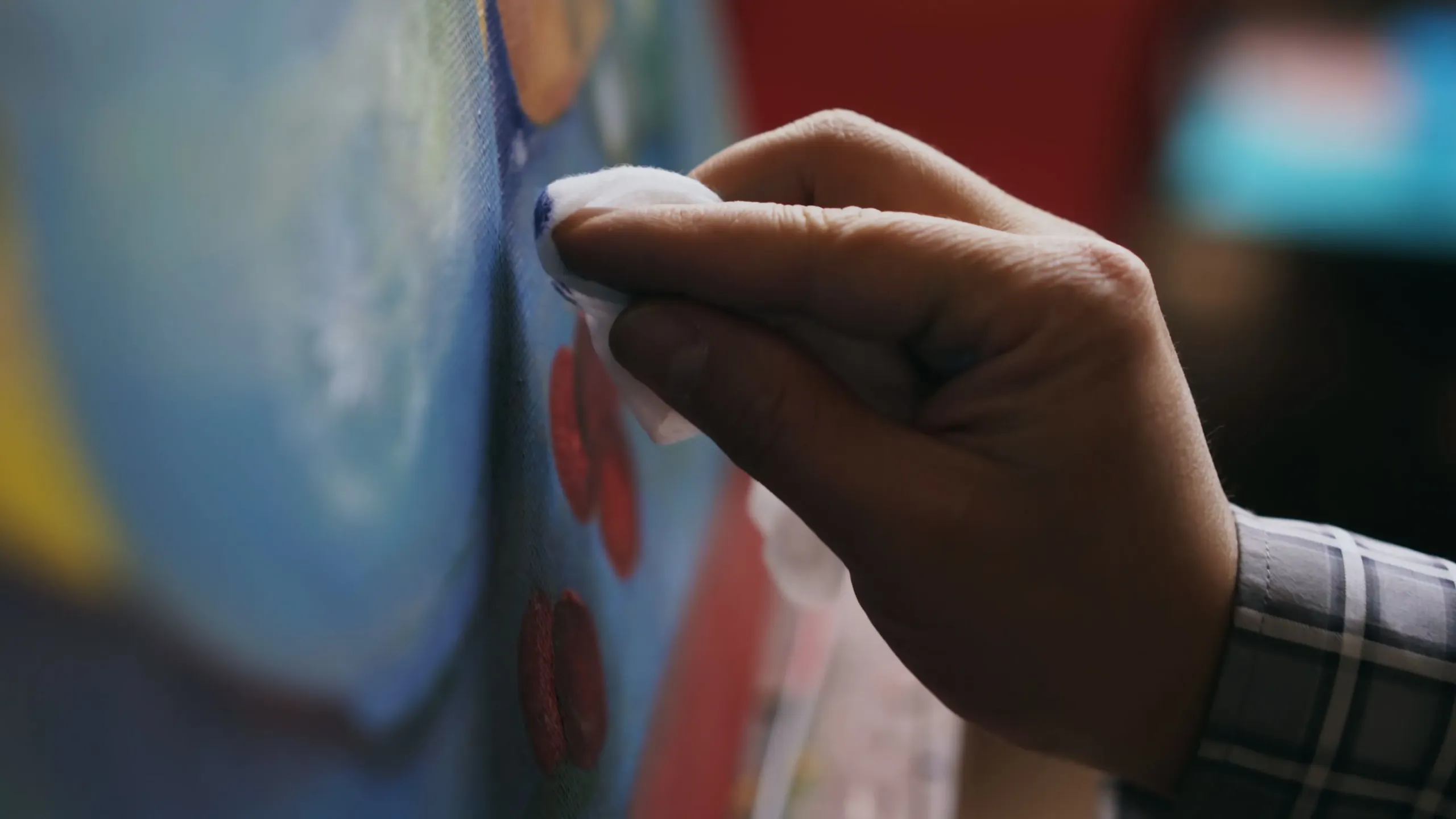
Caring for artworks begins with the easiest technique:
1. Dust dry. Use a soft, clean, wide brush and move it in one direction to remove the dust. Avoid feather dusters, as they can snag or scratch the painting, and don’t use microfiber with heavy texture.
2. Spot-test. If the dust does not lift, take a slightly wet cotton swab. Test it on the edge first to see if the spot is going dull.
3. Roll, don’t scrub. Work in small sections, change swabs frequently, and blot dry.
4. Stop at trouble. If the swab is colored, shiny, or sticky, it’s time to call a conservator!
Avoid using household sprays, glass cleaner, soap, baby wipes, or solvents like alcohol or acetone. Unless advised to do so by a conservator, do not use water on smooth, non-textured surfaces. Mould, smoke, grease, and sticky residue are jobs for the professionals.
How to Protect Paintings from Humidity?
But in humid climates, moisture is a more subtle problem than sunshine. It can cause mold, which can cause canvas to become slack or cause paint to crackle or flake. Extreme fluctuations in humidity are bad, so maintain an average of 40% to 55% relative humidity (RH). If RH goes above approximately 60-65%, then mold risk increases.
- Measure it regularly. A low-cost hygrometer is placed next to the painting to record the actual conditions.
- Choose walls wisely. Do not use bathrooms, kitchens, basements, or sweating exterior walls.
- Leave a gap. Bumpers allow air to flow past the frame.
- Use a dehumidifier or AC during the wet season.
- Don’t trap damp. Do not frame over moist or wet work, and don’t keep it on the floor or on cardboard.
- Inspect often. If there is white or grey fuzz, a musty odor, or rippling canvas, remove the artwork and contact the conservator.
Does Sunlight Fade Paintings?
Yes. UV is the primary cause of the cumulative and irreversible darkening and discoloration of art caused by light. The amount is dependent on the materials used:
- Acrylics are reasonably lightfast, although some fugitive pigments (such as some pinks, magentas, and violets) may fade. Test the lightfastness of the tube.
- Paperworks are the most susceptible. The watercolor/pastel/ink/marker will fade.
- The rule of mixed media is that it is as stable as the weakest element.
Avoid direct sunlight; use UV-filtering window glass or tint, LED lighting (indirect), and rotate art (don’t keep any permanently on display).
How To Care For Paper Artwork?
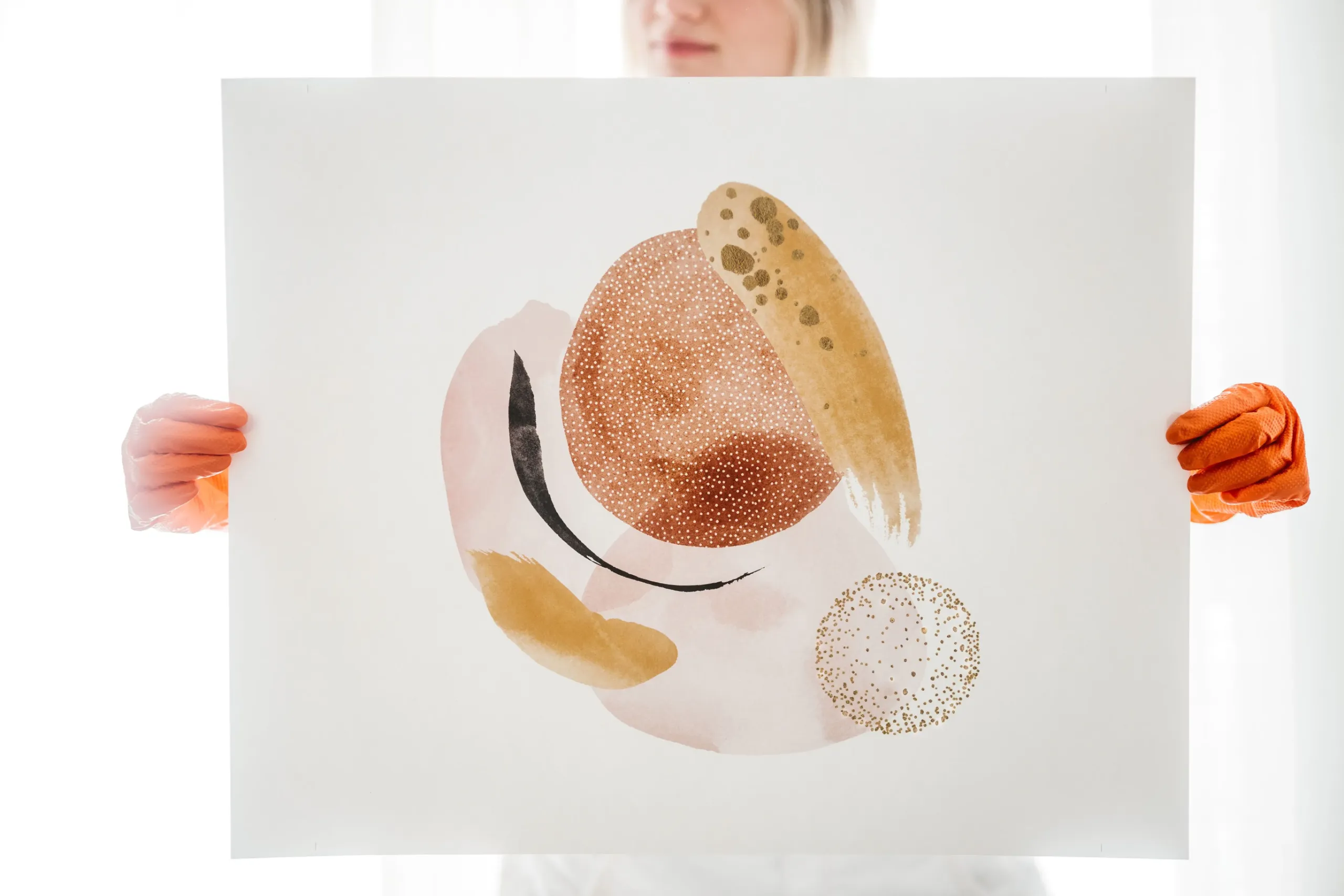
Paper absorbs moisture and is sensitive to light. So here are some rules to follow:
- Place in a framed card. Use acid-free mats and backing, and apply a window mat to ensure that the paper will not touch the glazing.
- Hinge, don’t glue. Apply the Japanese tissue and wheat starch paste. Do not use sticky tape or dry-mounting.
- Watch for foxing. Rusty-brown spots are caused by moisture; therefore, control humidity.
- Do not handle it with dirty hands or bend it. Clean hands/gloves have to be used, and hold the entire sheet.
- Store flat in acid-free boxes and between fragile surfaces with tissue.
How To Care For Acrylic Paint Brushes?

Properly care for your brushes; prevent your next painting from falling victim to brush bristles and clumpy marks. To care for acrylic paint brushes, follow the instructions:
- Don’t allow paint to dry in the brush. Rinse as you work.
- Brush with brush cleaner or mild soap from the ferrule to the tip until the water is clear.
- Don’t leave brushes in water.
- Thoroughly clean the ferrule, as dried paint in this area will spread the bristles.
- Store bristles up or in a case.
Final Thoughts
There are three general rules of art care that apply to the majority of modern and mixed media works of art: keep it steady (humidity and temperature), keep it out of strong light, and clean it the gentlest way possible. With archival framing for paper and good brush habits, your work will stay true to color for generations. If a household remedy is not what you are looking for and you want to get rid of mold, flaking paint, tears, water stains, or sticky residue, please contact a conservator.